How Much Does Water Damage Repair Cost in Arizona?
There is no single Arizona price for water damage, and anyone who gives you a firm number before inspecting is guessing. What does exist is a set of published figures from named sources. This page puts them side by side, with attribution, so you can check any quote against the market.
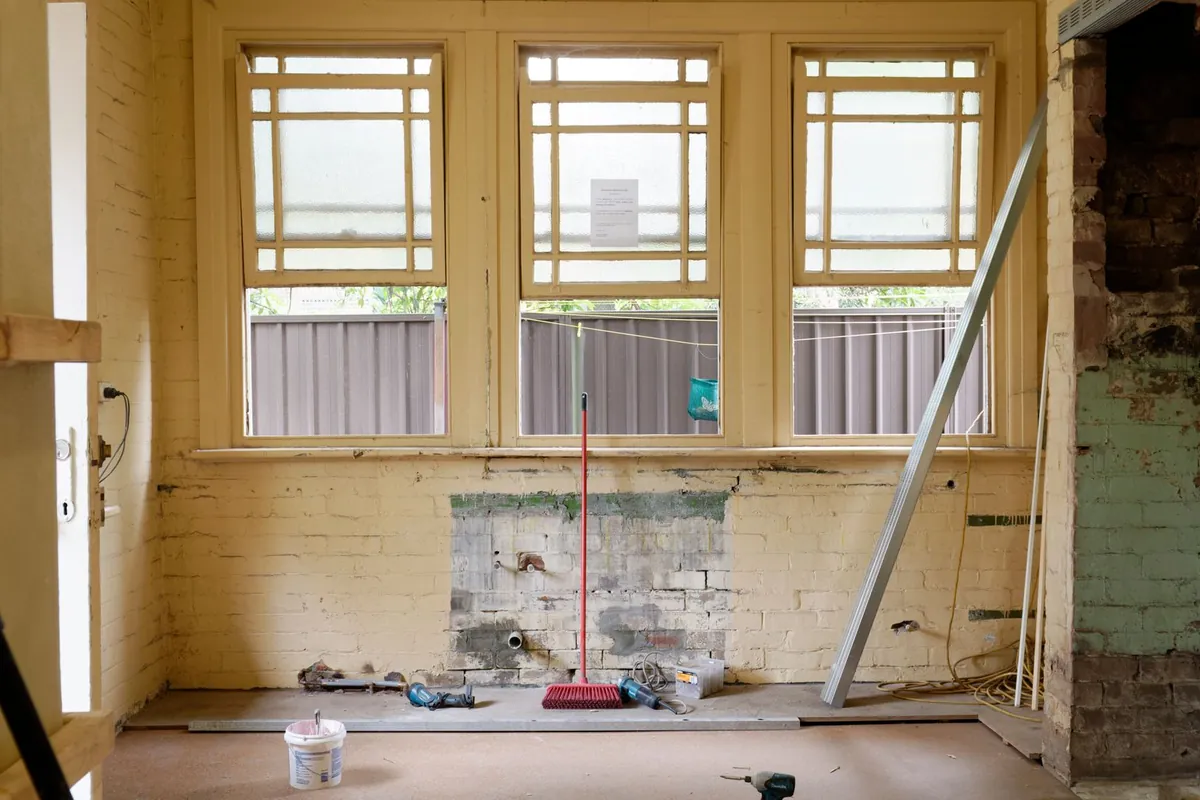
Illustrative photo — a room stripped back after extraction; the affected area and drying time are two of the main drivers of cost.
- Measured dryingDaily moisture readings guide every drying decision.
- Written scope firstYou see the itemised scope before work begins.
- Photo recordsPhotos and logs from first visit to final walkthrough.
- Homes and businessesHouses, rentals, offices, shops and restaurants.
The short answer
Most published Phoenix figures put a typical water damage mitigation job between $1,200 and $6,000, priced by category and area: Category 1 around $3 to $4.50 per square foot, Category 2 around $4 to $7, and Category 3 around $7 to $10 or more, with rebuild priced separately. Sources checked October 2026.
Water damage work is priced in two parts that are often confused. The first part is mitigation: stopping the source, extracting standing water, removing materials that cannot be dried, and running structural drying until moisture readings reach a dry standard. The second part is rebuild: putting back drywall, flooring, cabinets and paint. Published figures usually describe mitigation, and rebuild is priced separately. Keeping those two parts apart is the most useful thing you can do when comparing quotes.
This guide does not publish prices for Arizona Water Damage Pros, because a responsible price for your home cannot be set before an inspection measures the affected area, the category of water and the materials involved. Instead, we publish the market figures that other named sources have already made public, each one attributed to its source and checked in October 2026. You can use them to sense-check our written quote, and to sense-check anyone else's.
One figure needs separating from the rest before we start. The Insurance Information Institute, using ISO data for 2019 to 2023, reports that water damage and freezing claims average $15,400, and that about 1 in 60 insured homes files one each year. That is claim severity: what insurers paid out on claims, including rebuild. It is not the price of a mitigation job, and should not be compared directly with the per-square-foot rates below. It does explain why carriers take documentation so seriously.
The published numbers, side by side
Three Phoenix sources publish usable figures, and they agree more closely than most homeowners expect. Angi's Phoenix cost guide, updated in August 2026, reports an average of $4,623 and a typical range of $1,834 to $7,598. Rocky Mountain Restoration, an Arizona company that publishes its own ranges, puts a typical job at $1,200 to $5,000. AZ Water Damage Restoration, a Phoenix company with a published cost FAQ, says most jobs fall between $1,800 and $6,000, with small contained spills at $500 to $1,500. Read together, a defensible spine for a typical Phoenix mitigation job is $1,200 to $6,000, with rebuild priced separately on top.
Per square foot, the sources break the work down by water category. Category 1 is clean water from a sanitary source, Category 2 is gray water with significant contamination, and Category 3 is black water that is grossly contaminated. Across the three published sources, Category 1 sits at about $3 to $4.50 per square foot, Category 2 at about $4 to $7, and Category 3 at about $7 to $10 or more. That spine is the most useful number on this page: if a quote is far outside it, ask which part of the job explains the difference.
Angi's Phoenix guide also publishes component figures that help you read an itemised scope: labour at $80 to $200 per hour, mold removal at $1,200 to $3,800, drywall work at $300 to $850, flooring at $200 to $3,000, and plumbing at $350 to $4,000, all from Angi's Phoenix cost guide, checked October 2026. Rocky Mountain Restoration makes the same point from the operator side: rebuild is separate, and a firm number only follows an inspection — which is also how we quote.
| Published source | Clean / Category 1, per sq ft | Gray / Category 2, per sq ft | Black / Category 3, per sq ft | Typical job |
|---|---|---|---|---|
| Angi, Phoenix cost guide (updated Aug 2026) | $3.50 | $5.25 | $7.50 | Average $4,623; typical range $1,834 to $7,598 |
| Rocky Mountain Restoration, Arizona (published ranges) | $3 to $4 | $4 to $7 | $7 to $7.50 | $1,200 to $5,000; rebuild separate |
| AZ Water Damage Restoration, Phoenix (published FAQ) | $3.00 to $4.50 | $4.50 to $7.00 | $7.00 to $10.00+ | Most jobs $1,800 to $6,000; small contained spills $500 to $1,500 |
Sources: Angi Phoenix cost guide (updated August 2026), Rocky Mountain Restoration published ranges, and AZ Water Damage Restoration published FAQ — all checked October 2026. Rates describe mitigation; rebuild is priced separately.
Phoenix vs Tucson — and the average that doesn't exist
There is no published Tucson average for water damage repair, and this page will not invent one. Angi publishes a Phoenix cost guide; it does not publish an equivalent Tucson guide with an average job cost, so there is no Tucson counterpart to the $4,623 Phoenix average reported by Angi, checked October 2026. Any page that quotes you a precise Tucson average is presenting an estimate as a statistic. We would rather show you the gap honestly and give you the Tucson figures that operators themselves have actually published.
What does exist for Tucson is a set of operator-published bands from a Tucson operator's published pricing page (waterdamageintucsonaz.com, 'Champions'), checked October 2026. That source puts full restoration most often at $2,500 to $10,000, extraction from $500 with most jobs at $1,000 to $4,500, drying most often at $1,500 to $6,000, and sewage work at $3,000 to $12,000 or more. Those are one operator's published bands, not a market average, and they are labelled that way here so you can weigh them correctly.
Tucson and Phoenix work is priced the same way — by category, affected area and materials — even though the published evidence base is thinner in Tucson. Use the Phoenix spine as a reasonableness check, the Tucson bands as a local cross-reference, and judge any quote by its written, itemised scope.
| Tucson published band | Published figure |
|---|---|
| Full restoration, most often | $2,500 to $10,000 |
| Water extraction | From $500; most jobs $1,000 to $4,500 |
| Structural drying, most often | $1,500 to $6,000 |
| Sewage cleanup | $3,000 to $12,000+ |
Source: operator-published pricing bands, waterdamageintucsonaz.com ('Champions'), checked October 2026. These are one Tucson operator's published bands, not a Tucson market average — no published Tucson average exists.
What each kind of loss usually involves
Homeowners usually search by the event, not by the category: a slab leak, a burst water heater, a monsoon flood. No published source we found prices those events individually, and inventing per-event prices would mislead you, so the table below does something more honest. For each common Arizona loss it describes the typical scope, what drives the cost, and a careful general note on insurance. The money still comes from the category spine above: each loss is priced by category and area — see the table above — once an inspection establishes both.
Two attributed component figures do bear on specific rows. Where a long-running leak has led to mould growth, Angi's Phoenix guide puts mold removal at $1,200 to $3,800, checked October 2026. Where the failed part itself has to be repaired or replaced — a pipe, a valve, a heater — Angi's Phoenix guide puts plumbing at $350 to $4,000. Those are component ranges from one named source, not per-event totals, and your written scope should show them as separate lines if they apply.
| Loss type | Typical scope | What drives cost | Insurance note (general) |
|---|---|---|---|
| Slab leak | Leak detection, controlled access through flooring, extraction and drying of affected rooms | How long the leak ran, area affected, flooring type, access route | Sudden discharge is generally covered; the leak repair itself is often treated separately — your policy decides |
| Water heater burst | Shut-off and drain-down, extraction, drying of garage or closet and adjoining rooms, heater replacement as a separate plumbing line | Volume released, category, adjoining finished rooms, how quickly it was found | Sudden rupture is generally covered; replacement of an aged heater itself may not be — your policy decides |
| Swamp cooler or AC condensate line failure | Stopping the unit, drying ceiling or wall cavities, removing saturated insulation or drywall where needed | Hidden spread through ceilings and walls, duration before discovery | Accidental discharge from an AC system is generally covered; long-term seepage generally is not — your policy decides |
| Monsoon flood (rising water) | Extraction, Category 3 handling, removal of contaminated porous materials, drying and disinfection | Depth and area of intrusion, contamination, materials that must come out | Flood damage is generally excluded from standard homeowners policies and needs separate flood cover — your policy decides |
| Sewage backup | Contained extraction, Category 3 handling, removal of contaminated materials, disinfection, drying | Spread, materials affected, containment needed to protect clean areas | Backup generally needs a specific endorsement on the policy — check yours before assuming cover |
General guidance from Arizona Water Damage Pros, checked October 2026. No per-event prices are published because no named source publishes them; pricing follows the category spine above. Insurance notes are general information, not a coverage determination.
What changes the number
Five factors explain almost all of the distance between a small job and a large one. Understanding them lets you read a scope line by line instead of reacting to a single total, and it tells you which questions to ask when two quotes for the same rooms differ widely.
- Water category: clean water can often be dried in place; gray and especially black water require contaminated materials to come out, which is why the published per-square-foot spine rises from about $3 to $4.50 for Category 1 to about $7 to $10 or more for Category 3.
- Class and affected area: how much water, how deep it has penetrated, and how many rooms and materials are involved set the extraction and equipment load.
- Access: a slab leak under tile, a heater in a tight closet, or water inside a ceiling costs more to reach than water on an open floor, even at the same area.
- Materials: tile, hardwood, cabinets and built-ins each dry, survive or come out differently; porous materials that stay wet usually have to be removed.
- How long it sat: water found within hours is a drying job; water that sat for days can mean mould growth, swollen materials and a larger tear-out. Angi's Phoenix guide, checked October 2026, puts mold removal at $1,200 to $3,800 when it is needed.
What it costs not to dry properly
The cheapest-looking option — mopping up, running a fan for a day and closing the room — is often the most expensive route over the following months. Drywall, insulation, subfloor and cabinet bases can hold moisture long after a surface feels dry to the touch. Without moisture readings taken at the start and during drying, nobody, including a well-meaning homeowner, actually knows whether a structure is dry.
Hidden moisture has predictable consequences. Mould can establish itself inside wall cavities and under flooring, turning a drying job into a removal job. Wood and laminate flooring warp, cup and delaminate. Wet drywall loses strength and has to be cut out over a larger area than would have been needed on day one.
Proper drying is verified, not assumed. Readings are logged, equipment runs until readings reach a dry standard for the material involved, and the log becomes part of the project documentation. That record proves the structure was actually dried and gives your insurer a clear account of what was done and why.
How our quoting works
Our process is deliberately plain. It starts with an inspection: we find and confirm the source is stopped, take moisture readings, establish the category of water and the affected area, and photograph the rooms. Only then do we write the scope — an itemised document that lists the extraction, removal, drying and monitoring the job needs, line by line. That written scope is the price. If hidden damage appears once work opens up, the scope is revised in writing, with photographs and readings, before the extra work proceeds.
That structure is why this page leads with other sources' figures rather than our own. The published ranges above — Angi, Rocky Mountain Restoration and AZ Water Damage Restoration for Phoenix, and the operator-published bands for Tucson, all checked October 2026 — give you an independent yardstick before we ever visit. Compare our itemised scope against the per-square-foot spine, ask us to explain any line that sits outside it, and expect the explanation to point to a specific condition in your home: a category, an access problem, a material, or time the water sat.
If you are comparing quotes, compare the documents, not the totals: each scope should state the category, the affected area, what comes out and what is dried in place, how drying will be verified, and whether rebuild is included or priced separately. To start with an inspection, call Arizona Water Damage Pros on (855) 981-1210.
Angi's Phoenix cost guide reports an average of $4,623, with a typical range of $1,834 to $7,598, updated August 2026 and checked by us in October 2026. Other published Phoenix sources put typical mitigation jobs at $1,200 to $5,000 and $1,800 to $6,000. Rebuild is usually priced separately from mitigation in all of these figures.
No published Tucson average exists, because Angi publishes a Phoenix cost guide but no equivalent Tucson guide with an average job cost. Instead of inventing one, we publish the bands a Tucson operator itself publishes: full restoration most often $2,500 to $10,000, drying most often $1,500 to $6,000, checked October 2026. Judge Tucson quotes by their itemised scope.
Published sources price mitigation per square foot by water category, checked October 2026. Across the three Phoenix sources on this page, Category 1 clean water runs about $3 to $4.50 per square foot, Category 2 gray water about $4 to $7, and Category 3 black water about $7 to $10 or more. Area, access and materials move a job within those bands.
Generally no: the published figures on this page describe mitigation, and rebuild is priced separately. Rocky Mountain Restoration states that explicitly in its published ranges, checked October 2026. Angi's Phoenix guide lists rebuild components separately, including drywall at $300 to $850 and flooring at $200 to $3,000. Always ask whether a quote includes putting materials back, or only taking wet ones out.
Compare the written, itemised scope against the published per-square-foot spine for your water category, and check that it states the affected area, what is removed, what is dried in place, and how drying is verified. Then ask the company to explain, in writing, any line far outside the published ranges on this page, checked October 2026. A fair quote can always explain itself.
Water where it shouldn't be?
One call tells us what happened, where you are, and what the water touched — and gets the drying started before the damage spreads.
Tell us what happened
Call, or send the form and we'll call you back. If water is still spreading, shut the water off at the main if you can do it safely — then call.
- Phone(855) 981-1210
- Address6900 N 21st Ave, Phoenix, AZ 85015
- Coverage25 Arizona cities — see the service map