Monsoon Water Damage in Arizona: The First 24 Hours
Arizona monsoon storms do not behave like ordinary rain. A downpour can swell a dry wash, overwhelm storm drains and put water under your doors in under an hour. This playbook covers the season in three parts: what to do before it starts, what to do in the first hour, and how the first 24 hours should run.
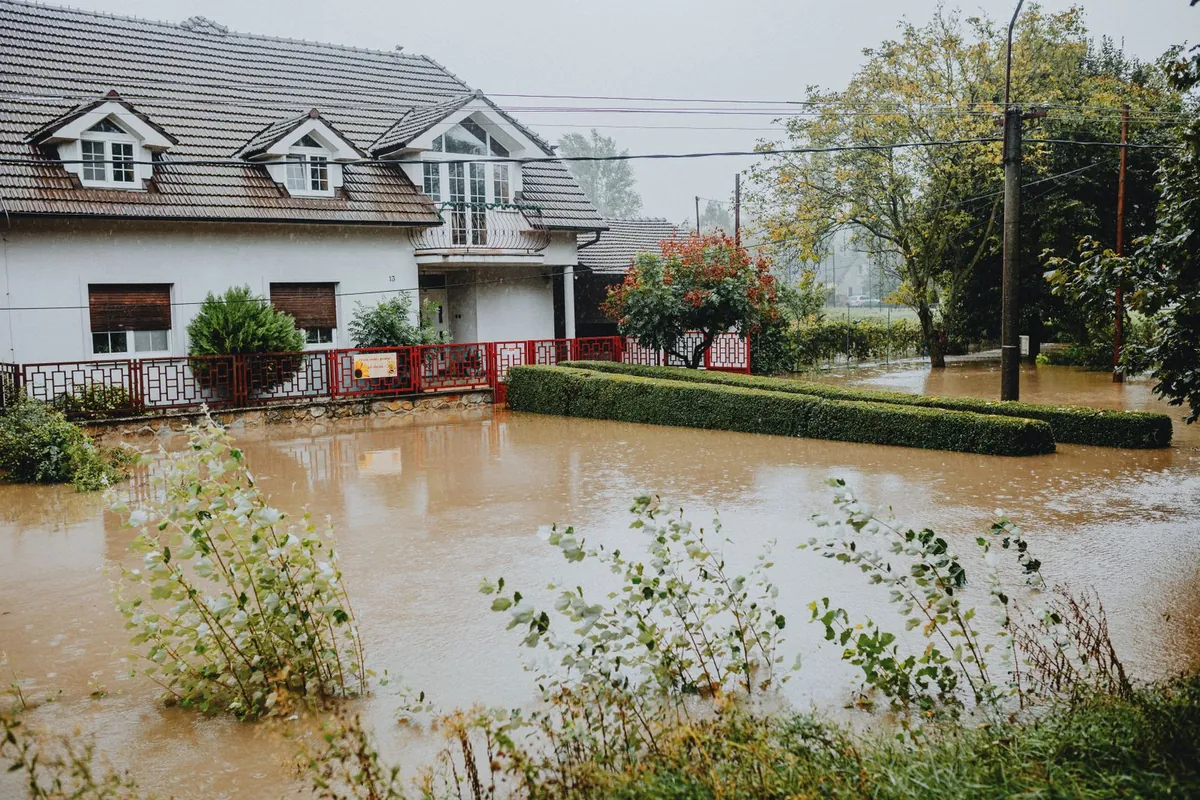
Illustrative photo — a home surrounded by floodwater after a storm; in Arizona, swollen washes and overwhelmed storm drains are what push water toward homes.
- Measured dryingDaily moisture readings guide every drying decision.
- Written scope firstYou see the itemised scope before work begins.
- Photo recordsPhotos and logs from first visit to final walkthrough.
- Homes and businessesHouses, rentals, offices, shops and restaurants.
The short answer
Arizona's official monsoon season runs June 15 to September 30, and the first 24 hours decide most of the damage. Protect people and power first, stop water safely, document everything, extract standing water, and treat rising ground water as Category 3 contamination. Call Arizona Water Damage Pros on (855) 981-1210 for extraction and drying.
The National Weather Service (NWS) sets Arizona's monsoon season at fixed dates, June 15 to September 30, adopted in 2008. Roughly 50 percent of the Desert Southwest's annual precipitation falls between June and September, according to NWS Phoenix — and it does not fall evenly. It arrives in bursts: intense downpours on dry, hard ground, in neighbourhoods where the washes and storm drains are built for ordinary rain, not for the worst hour of the summer.
Recent seasons show what that means in practice. NWS Phoenix's 2025 season review records significant flash flooding, including on 25 August 2025 across southern and central Arizona, and catastrophic flooding in Globe and Miami on 25 to 27 September 2025. The Town of Gilbert's flooding guidance describes the local mechanism plainly: monsoon downpours swell normally dry washes and overwhelm storm drains, producing street flooding. A home does not need to sit in a mapped flood zone for any of this to reach its doorstep.
This playbook is written for that reality. It separates the two kinds of monsoon water — rain coming through a storm-damaged roof, and ground water rising into the home — because they are handled differently, categorised differently and treated differently by insurers. And it gives you a safety order for the first hour that puts people before property, every time. If water is in your home now, skip to the first-hour section, then call Arizona Water Damage Pros on (855) 981-1210.
Before the season: June 15 comes every year
Monsoon is the most predictable water risk an Arizona home faces, because the NWS dates are fixed: the season opens June 15 and closes September 30. The work that prevents damage is unglamorous and mostly done once: a sound roof, drainage that moves water away from the house, and a household that knows where its shut-off valve is before it ever needs it at midnight.
Walk the roof and the drainage in May or early June. Look for cracked or slipped tiles, worn flashing and debris in valleys and scuppers, and clear them. Check that grading, French drains and downspout extensions carry water away from the foundation rather than pooling it against the walls, and that washes and drainage paths on your lot are not blocked by landscaping or stored material. Inside, locate the main water shut-off valve and the fixture valves, check that they turn, and show everyone in the house where they are.
Do the records work in the same week. Photograph every room, including inside cabinets under sinks and the water heater area, and store the set somewhere outside the house, such as cloud storage. Those photographs become the before record for any claim. Finally, think about flood insurance in spring, not during storm week: flood damage is excluded from standard homeowners policies, according to the Insurance Information Institute, and National Flood Insurance Program cover carries a 30-day waiting period, so cover cannot be bought when a storm is already forecast and still protect that storm.
- Roof: repair cracked tiles, flashing and worn seals; clear valleys, scuppers and gutters.
- Drainage: confirm grading and drains move water away from the foundation; clear washes and drainage paths.
- Shut-off valve: find the main valve, test that it turns, and make sure everyone in the house knows where it is.
- Records: photograph every room and store the set off-site or in cloud storage.
- Flood insurance: decide in spring — NFIP cover has a 30-day waiting period before it takes effect.
- Supplies: torches, towels, buckets, plastic sheeting and a charged phone, stored where they can be reached in the dark.
The first hour: safety first, in order
Work in this order: power, then water, then belongings. People come before property, and electricity is the hazard that turns a flood into an emergency. If water is near outlets, appliances or the electrical panel, keep everyone out of the affected area until the power to those circuits is off at the breaker — and if you cannot reach the breaker without standing in water, stay out and call for help. Treat every flooded electrical situation as live until it is proven otherwise.
Once the area is safe, stop the water if it is a plumbing source: close the fixture valve or the main shut-off. For storm water, do what is safely possible at doors and thresholds with towels and sandbags if you have them, and move what you can carry — documents, electronics, photographs, soft furnishings — up and out of the water. Photograph and video the rooms as they are, before the cleanup changes them, because that record serves the claim and the drying plan alike. Then call for extraction: the sooner standing water is out, the smaller the job becomes.
- Get people and pets out of flooded rooms with any electrical risk.
- Turn off power to affected circuits at the breaker, without standing in water to do it.
- Stop plumbing water at the fixture valve or main shut-off, once it is safe.
- Photograph and video every affected room before moving or removing anything.
- Move documents, electronics and valuables up and dry, where it is safe to do so.
- Call Arizona Water Damage Pros on (855) 981-1210 for extraction and drying.
What not to do
Four common instincts make monsoon damage worse, and each is worth naming plainly. The first two are about safety and contamination; the second two are about evidence and time.
- Do not enter standing water near live electrics. If breakers cannot be reached dry, stay out of the room until the power situation is resolved.
- Do not run a household fan on water you suspect is sewage or mould-contaminated. A fan aerosolises contaminants and spreads them beyond the affected room, turning a contained problem into a whole-house one.
- Do not tear out wet drywall before documenting it for the claim. Photographs, video and moisture readings taken first are the evidence the claim file needs; demolition can wait the short time documentation takes.
- Do not wait to see if it dries on its own in a sealed, air-conditioned house. Closed-up moisture migrates into wall cavities and under flooring, and the job grows while the surface looks calmer. Monsoon water that entered from the ground is handled as contaminated from the start, not dried hopefully in place.
The first 24 hours: extraction, category, documentation, carrier
The first 24 hours decide the size of the whole job, and they run in a sequence. Extraction comes first: standing water is removed with pumps and extraction equipment, because every hour water stands, it wicks higher into drywall, soaks further into flooring and pushes the affected area outward. Belongings that can be saved are moved or blocked up; porous materials that ground water has reached are assessed for removal rather than drying.
The category decision comes with extraction, and it is made from the source, not the appearance, of the water. Rising or surface water entering a home is handled as Category 3 — grossly contaminated — because of what it has crossed on its way in: streets, soil, garages and everything they carry. Rain entering through a storm-damaged roof is a different loss, categorised from its own cleaner source, provided it has not mixed with ground water. The category sets the handling: protective equipment, containment, which materials come out, and how disinfection is done.
Documentation and the carrier call complete the first day. The documentation set — photographs and video from before disturbance, moisture readings mapping the affected area, and a record of what was extracted and removed — is assembled as the work proceeds, not reconstructed later. Then call your carrier, describe the loss by its source — roof rain or ground intrusion — and open the claim. Policies expect reasonable mitigation to prevent further damage, and the extraction and drying already under way are exactly that; keep receipts for everything.
Roof rain versus ground intrusion: two different losses
The split in the table below is the most important distinction in any monsoon claim, and it is routinely blurred. Rain that enters through a roof damaged by the storm itself fell from above and starts clean. Water that rises from the ground, through door thresholds, garages and wall bases, has travelled across contaminated surfaces and is handled as Category 3. The claim treatment generally follows the same split: flood — rising water — is excluded from standard homeowners policies, per the Insurance Information Institute, checked October 2026, while rain entering through storm-caused roof damage is generally treated as part of the storm loss. The word generally matters: your policy wording decides your claim.
| Loss | Source | Category | Typical claim treatment (general) | First steps |
|---|---|---|---|---|
| Rain through a storm-damaged roof | Rainfall entering through storm-caused damage to the roof | Set at release from its source; generally cleaner water unless it mixes with ground water | Generally covered as part of the storm loss when the roof damage was caused by a covered event — policy decides | Photograph the damage and the entry point, contain drips, protect belongings, document before any tear-out |
| Ground intrusion (rising or surface water) | Washes, streets and yards rising into the home through doors, garages and wall bases | Category 3 — grossly contaminated handling | Flood is generally excluded from standard homeowners policies; separate flood cover applies — policy decides | Safety first around electrics, extract promptly, treat porous materials as contaminated, document everything |
General information based on Insurance Information Institute descriptions of standard policies and professional water category practice, checked October 2026. Categories are set at the source of release; your policy wording decides your claim.
The week after: drying, verified
Once extraction and any necessary removal are done, the job becomes a measured drying programme, typically running over the following days. Air movers and dehumidifiers are placed from the moisture map, not by guesswork, and readings are taken daily at the same points so progress is visible in numbers. Equipment is adjusted or removed room by room as readings fall. In a sealed, air-conditioned Arizona house, this controlled drying is what replaces the hope that things will dry on their own.
A dry standard is a measurement, not a feeling. Materials are dry when their moisture readings reach the level of the same materials in unaffected parts of the house — the dry goal set at the first visit. Surfaces can feel dry days before wall cavities and subfloors reach that standard, which is why the final readings matter: they are the record that the structure was actually dry before anything was closed up or rebuilt over it. Ask for the final readings and keep them with your claim file.
Close the week by closing the loop. Confirm the carrier has the documentation set and any supplement for hidden damage found during drying. Photograph the dried rooms before rebuild begins. And before the next storm, fix what this one taught you: the door threshold that let water in, the grading that pooled it, the roof detail that failed. The season runs to September 30, and in Arizona there is usually a next storm. Arizona Water Damage Pros is on (855) 981-1210 through all of it.
The National Weather Service sets Arizona's monsoon season at June 15 to September 30, fixed dates adopted in 2008 and checked October 2026. Roughly 50 percent of the Desert Southwest's annual precipitation falls between June and September, according to NWS Phoenix, often in short, intense downpours. Preparation belongs in May and early June, before the first storms arrive.
Put power before water and belongings: keep people out of flooded areas near electrics, and switch off affected circuits at the breaker without standing in water. Then stop any plumbing source, photograph and video everything before disturbing it, move valuables up where safe, and call for extraction on (855) 981-1210. The first hour sets the size of the whole job.
Yes: rising or surface water entering a home is handled as Category 3, grossly contaminated, because of what it crosses on its way in. That handling means porous materials it reaches are generally removed rather than dried, and the area is disinfected. Rain entering through a storm-damaged roof is a separate loss, categorised from its own cleaner source unless the waters mix.
It depends on the source, in general terms. Flood — rising ground water — is excluded from standard homeowners policies and needs separate flood cover, per the Insurance Information Institute, checked October 2026. Rain entering through a roof damaged by the storm itself is generally treated differently, as part of the storm loss. Your policy wording decides your specific claim.
Drying runs over the days after extraction, guided by daily moisture readings rather than a fixed timetable. Equipment is placed from a moisture map, adjusted as readings fall, and removed when readings reach the dry standard set from unaffected materials. Surfaces often feel dry before wall cavities are, which is why final verified readings, not touch, close the job.
Water where it shouldn't be?
One call tells us what happened, where you are, and what the water touched — and gets the drying started before the damage spreads.
Tell us what happened
Call, or send the form and we'll call you back. If water is still spreading, shut the water off at the main if you can do it safely — then call.
- Phone(855) 981-1210
- Address6900 N 21st Ave, Phoenix, AZ 85015
- Coverage25 Arizona cities — see the service map