Water Damage Insurance Claims in Arizona: A Field Guide
Most Arizona water damage claims are won or lost on two things: whether the loss was sudden or gradual, and whether it was documented before it was disturbed. This field guide explains both, in the order you will actually need them, using the standard policy concepts published by the Insurance Information Institute.
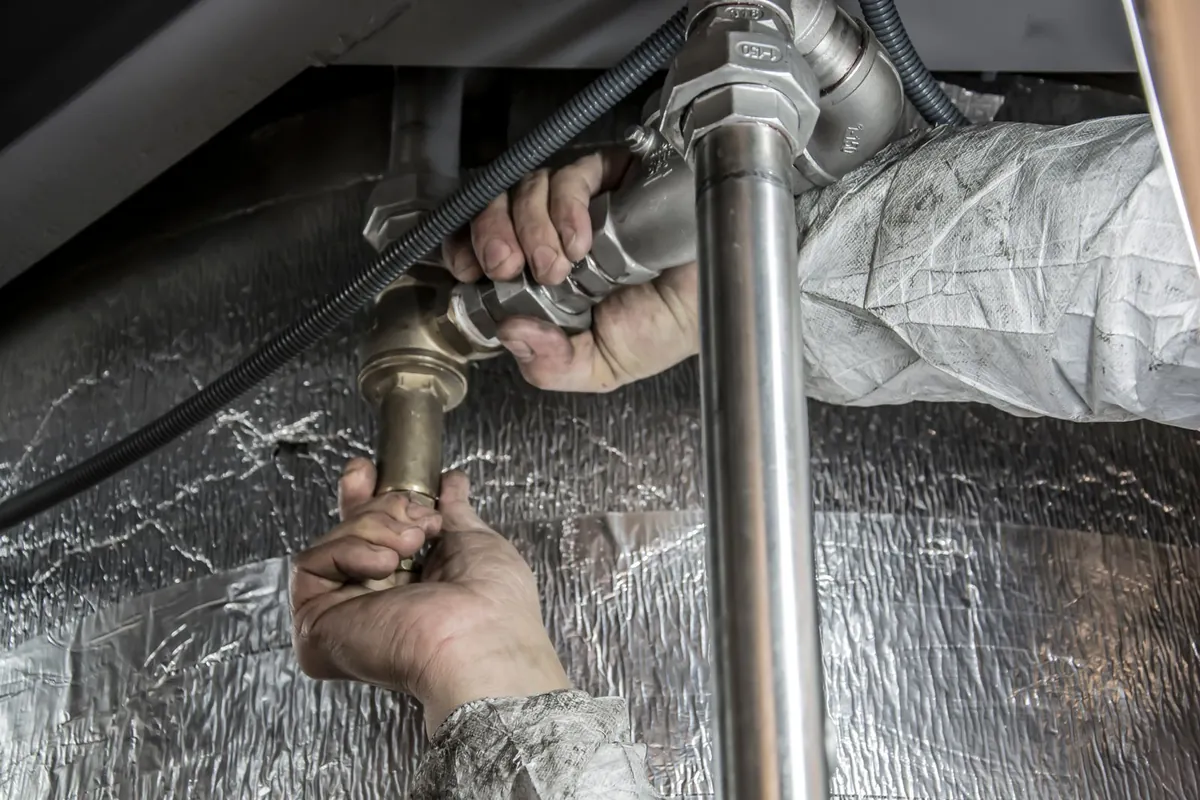
Illustrative photo — repair work underway at a home; photos and readings taken at the first visit and logged daily are core claim documentation.
- Measured dryingDaily moisture readings guide every drying decision.
- Written scope firstYou see the itemised scope before work begins.
- Photo recordsPhotos and logs from first visit to final walkthrough.
- Homes and businessesHouses, rentals, offices, shops and restaurants.
The short answer
Most Arizona homeowners policies generally cover sudden, accidental water discharge from plumbing, heating, air conditioning, sprinklers, or appliances, and generally exclude flood, gradual seepage, and sewer backup without an endorsement. Stop the water, document everything before disturbing it, mitigate further damage, then call your carrier for a claim number. Policy wording decides every claim.
This page is general information about how water damage claims usually work in Arizona, drawn from the Insurance Information Institute (III) and Arizona statute, checked October 2026. It is not legal advice, and it cannot tell you whether your specific claim will be paid: your own policy wording, its endorsements and its exclusions decide that. What it can do is help you act in the right order in the first hours, document the loss the way adjusters need it documented, and understand terms like supplement, scope and loss of use.
The central distinction in almost every water claim is sudden versus gradual. According to the III, standard homeowners and renters policies cover accidental discharge or overflow of water or steam from plumbing, heating, air conditioning or sprinkler systems or from household appliances, as well as the sudden tearing apart, cracking or freezing of such a system. The same standard policies exclude damage from continuous or repeated seepage over weeks, months or years. A pipe that bursts on Tuesday is one kind of event; a pipe that has been weeping inside a wall since spring is another, and the two are treated very differently.
Arizona Water Damage Pros works inside this process every week: stop the loss from growing, document it properly, dry the structure to a verified standard, and produce the itemised records — photographs, moisture readings, daily drying logs and a written scope — that a claim file needs. Call us on (855) 981-1210 when you need the work itself done.
First call: carrier or contractor first?
The practical order is: stop the water, document, mitigate, then call your carrier. Shut off the supply at the fixture or the main valve, and make the area safe. Photograph and video everything before you move or remove anything. Then take reasonable steps to prevent further damage — extracting standing water and starting drying are the standard examples — because your policy almost certainly requires reasonable mitigation; check yours for the exact wording. A loss that keeps growing while everyone waits for paperwork is a loss you may partly own.
Call your carrier once the situation is stable: what happened, when you discovered it, what you have done, and what is affected. Get a claim number before any big spend beyond emergency mitigation, and note the deductible. Emergency mitigation should not wait for an adjuster's visit — adjusters expect the water stopped and drying started. Larger decisions, especially rebuild choices, are better made once the claim is open.
- Stop the water and make the area safe, including power to affected circuits if water is near electrics.
- Photograph and video every affected room before disturbing anything.
- Start reasonable mitigation: extraction and drying to prevent further damage.
- Call your carrier, open the claim, and record the claim number and deductible.
- Keep every receipt and every record from this point forward, in one folder.
Document first: a field guide you can follow on your phone
Missing documentation is the main cause of delayed and denied water claims in industry practice, ahead of almost everything else. The fix is unglamorous and entirely within your control: record the loss before it changes. Photograph and video everything before disturbing it — standing water, the failed part, stained ceilings, swollen baseboards, damaged belongings — with wide shots of each room and close-ups of each item. Keep the originals with their timestamps.
Professional documentation builds on the same foundation. Moisture readings at the first visit map how far water has travelled, including into walls and under floors that look dry. During drying, readings and equipment are logged daily, so the file shows progress toward a dry standard. Removed materials are photographed before disposal. Project documentation is a named component of ANSI/IICRC S500, the standard for professional water damage restoration.
- Wide and close-up photos and video of every affected room, before anything is moved.
- A photograph of the failed part or fitting itself, in place.
- Moisture readings at the first visit, with locations recorded.
- Daily drying logs: readings, equipment placed, and changes made.
- Receipts for every related expense, kept in one place.
- Samples or photographs of removed materials before they are discarded.
- Names, dates and claim numbers for every call with your carrier.
Covered, generally not, and depends
The table below summarises how standard policies generally treat the losses Arizona homeowners actually have, based on the III's published descriptions of standard homeowners and renters cover, checked October 2026. Read it as a map, not a verdict. Two rules of thumb sit behind most of it: top-down water — water that falls or discharges inside the home — is generally covered, while bottom-up water — water that rises from the ground — generally is not. And flood damage is excluded from standard policies altogether: flood cover is a separate National Flood Insurance Program or private policy, and NFIP cover carries a 30-day waiting period before it takes effect.
Three traps deserve spelling out. First, the repair of the failed part itself — the worn pipe, the split hose, the aged water heater — is often excluded as wear and tear, even when the resulting water damage is covered. Second, sewer or drain backup generally needs a specific endorsement; without one, a backup loss is commonly excluded. Third, rain entering through a hole in the roof is covered only when the hole was caused by a covered event, such as storm damage; rain through a roof that simply wore out is a different matter.
| Loss | Covered generally | Generally not | Depends |
|---|---|---|---|
| Burst pipe | Yes — sudden, accidental discharge from a plumbing system is a standard covered cause | — | The failed pipe's own repair is often excluded as wear and tear |
| Appliance overflow (washer, dishwasher) | Yes — accidental overflow from a household appliance is generally covered | — | Overflow from a fault that developed gradually may be disputed |
| Water heater rupture | Yes — sudden rupture and the resulting discharge are generally covered | — | Replacing an aged heater itself is often treated as wear and tear |
| Rain through a storm-damaged roof | Yes, generally — when the hole was caused by a covered event such as a storm | — | Rain through deterioration or an old, worn roof is generally not covered |
| Rising flood water | — | Yes — flood is excluded from standard policies; separate NFIP or private flood cover applies | Whether any separate flood policy was in force, and its waiting period |
| Gradual leak or seepage | — | Yes — continuous or repeated seepage over weeks, months or years is excluded in standard wording | How long the leak ran, which is why discovery documentation matters |
| Sewer or drain backup | — | Generally excluded without an endorsement | Whether your policy carries a backup endorsement |
| Mold after a covered loss | Often, as part of the covered loss when handled promptly | Mold from a long-unaddressed leak generally follows the excluded leak | Policy sub-limits and how quickly mitigation started |
General information based on Insurance Information Institute descriptions of standard homeowners and renters policies, checked October 2026. Your policy wording, endorsements and deductible decide your claim; this table is not a coverage determination.
Your written scope versus the adjuster's scope
Two documents will describe your job, and they do not always match at first. The adjuster's scope is the insurer's estimate of the covered work, usually built in Xactimate, the estimating platform most carriers use. Our written scope is an itemised account of the work the structure actually needs, built from inspection findings, moisture readings and photographs. Where they differ, the difference is usually information: damage hidden when the first estimate was written.
How supplements work
When hidden damage appears after work starts — saturated insulation inside a wall, subfloor damage under a finished floor — the contractor documents it with photographs, moisture readings and revised Xactimate line items, and submits a supplement to the adjuster. Supplements are routine in water work, not confrontational: water hides, and first scopes are written before anyone can see inside walls. What makes a supplement succeed is the documentation behind it, and what makes claims stall is usually its absence. This is the practical reason the document-first habits in this guide matter so much.
What to ask when scopes differ
Ask which specific line items differ, and what evidence supports each version. Readings and photographs settle most of these questions, because they record conditions rather than opinions. Keep the conversation on the documents: a drying log that shows a wall still wet on day three is a stronger argument than any phone call. If a large claim becomes genuinely disputed, a public adjuster — a licensed professional who represents policyholders — exists as an option; for most documented claims it is never needed.
Additional living expense: how loss of use actually works
If a covered loss makes your home uninhabitable, the loss-of-use part of a standard policy — additional living expense, or ALE — covers the extra costs above your normal living expenses while you are displaced: the hotel or rental premium, extra food costs, and similar increases. Two mechanics matter. ALE is generally limited to 20 percent of your dwelling coverage, and it is receipt-based: the insurer reimburses documented extra costs, so keep every receipt from the first night. There is no standard per-day cap as a general rule, whatever you may read elsewhere; the limit is the percentage and your documentation.
Treat ALE as a records exercise from day one: keep normal and displacement spending distinguishable, save receipts for everything, and confirm with your adjuster early which expenses count as additional.
Rebuild work and the Arizona ROC rule
Mitigation and rebuild are regulated differently in Arizona, and the rebuild stage is where homeowners most often hire badly. Reconstruction work over $1,000, or work that requires a permit, is licensed-contractor work in Arizona, overseen by the Arizona Registrar of Contractors (ROC). Before rebuild begins, verify any contractor's licence for the work at roc.az.gov, the ROC's official lookup. The same check is worth running on anyone you hire for substantial repairs: it takes a minute, and it confirms the business is licensed for the category of work it is quoting.
Keep the mitigation documentation and rebuild paperwork connected: the drying logs and final readings establish that the structure was dry before it was closed up. Closing wet materials into a wall is how a repaired room becomes a mould problem the following season.
Renters and landlords
This section is general information about Arizona landlord-tenant law, not legal advice; for a live dispute, consult an Arizona attorney. Under A.R.S. section 33-1324, a landlord must keep the premises fit and habitable and maintain plumbing and air conditioning in good working order. When water damage makes a rental uninhabitable, that duty sits with the landlord, and tenants should give notice in writing and keep copies.
Two further provisions matter in water cases. Under A.R.S. section 33-1361, a tenant may give written notice of termination — five days where the breach materially affects health and safety, ten days for other material breaches — if the landlord fails to comply materially with the rental agreement or section 33-1324. Under section 33-1363, for minor defects, a tenant may arrange repair-and-deduct after ten days' written notice, capped at $300 or half a month's rent, whichever is greater, with work by a licensed contractor, an itemised statement and a lien waiver.
What wins disputes
Disputed water claims are rarely won by the loudest voice. They are won by the most complete file: dated photographs taken before anything was disturbed, moisture readings at the first visit, daily drying logs, an itemised written scope, receipts, and a supplement documenting hidden damage when it is found. That file lets an adjuster say yes, because every line traces to evidence.
Our commitment on every job is that file. Arizona Water Damage Pros documents before we disturb, logs readings daily, writes the scope item by item, and prepares supplement documentation when hidden damage appears, in the format adjusters work with. We cannot promise any claim's outcome — no honest contractor can, because your policy and your carrier decide that. What we can promise is that the evidence for your claim will be complete, organised and ready. If you have water in your home now, call (855) 981-1210, and start your own photographs while we are on the way.
Standard policies generally cover sudden, accidental discharge or overflow from plumbing, heating, air conditioning, sprinkler systems or household appliances, according to the Insurance Information Institute, checked October 2026. They generally exclude flood, gradual seepage over weeks or months, and sewer backup without an endorsement. Your own policy wording and endorsements decide your specific claim.
Stop the water first, then document and mitigate before calling your carrier. Photograph everything before disturbing it, start reasonable mitigation such as extraction and drying, then open the claim and get a claim number before any big spend beyond emergency work. Your policy almost certainly requires reasonable mitigation, so waiting for permission before drying usually harms the claim.
No: flood damage is excluded from standard homeowners policies, according to the Insurance Information Institute, checked October 2026. Flood cover is a separate National Flood Insurance Program or private policy, and NFIP cover carries a 30-day waiting period before it takes effect. That waiting period is why flood cover has to be bought before a storm is on the horizon.
Additional living expense covers the extra costs above your normal living expenses when a covered loss makes your home uninhabitable. It is generally limited to 20 percent of your dwelling coverage and is receipt-based, so keep every receipt from the first night. There is no standard per-day cap as a general rule; the percentage limit and your documentation govern what is reimbursed.
The contractor documents the newly found damage and submits a supplement to your adjuster. Photographs, moisture readings and revised Xactimate line items support the supplement, which is a routine part of water work because damage hides inside walls and under floors. Missing documentation, not the supplement process itself, is the main cause of delays and denials in industry practice.
Water where it shouldn't be?
One call tells us what happened, where you are, and what the water touched — and gets the drying started before the damage spreads.
Tell us what happened
Call, or send the form and we'll call you back. If water is still spreading, shut the water off at the main if you can do it safely — then call.
- Phone(855) 981-1210
- Address6900 N 21st Ave, Phoenix, AZ 85015
- Coverage25 Arizona cities — see the service map